Search engine optimization is no longer just about keywords and backlinks. Today, trust plays a major role in how websites rank. Search engines want to show users content that is reliable, accurate, and created by credible sources.
This is where E-E-A-T comes into the picture.
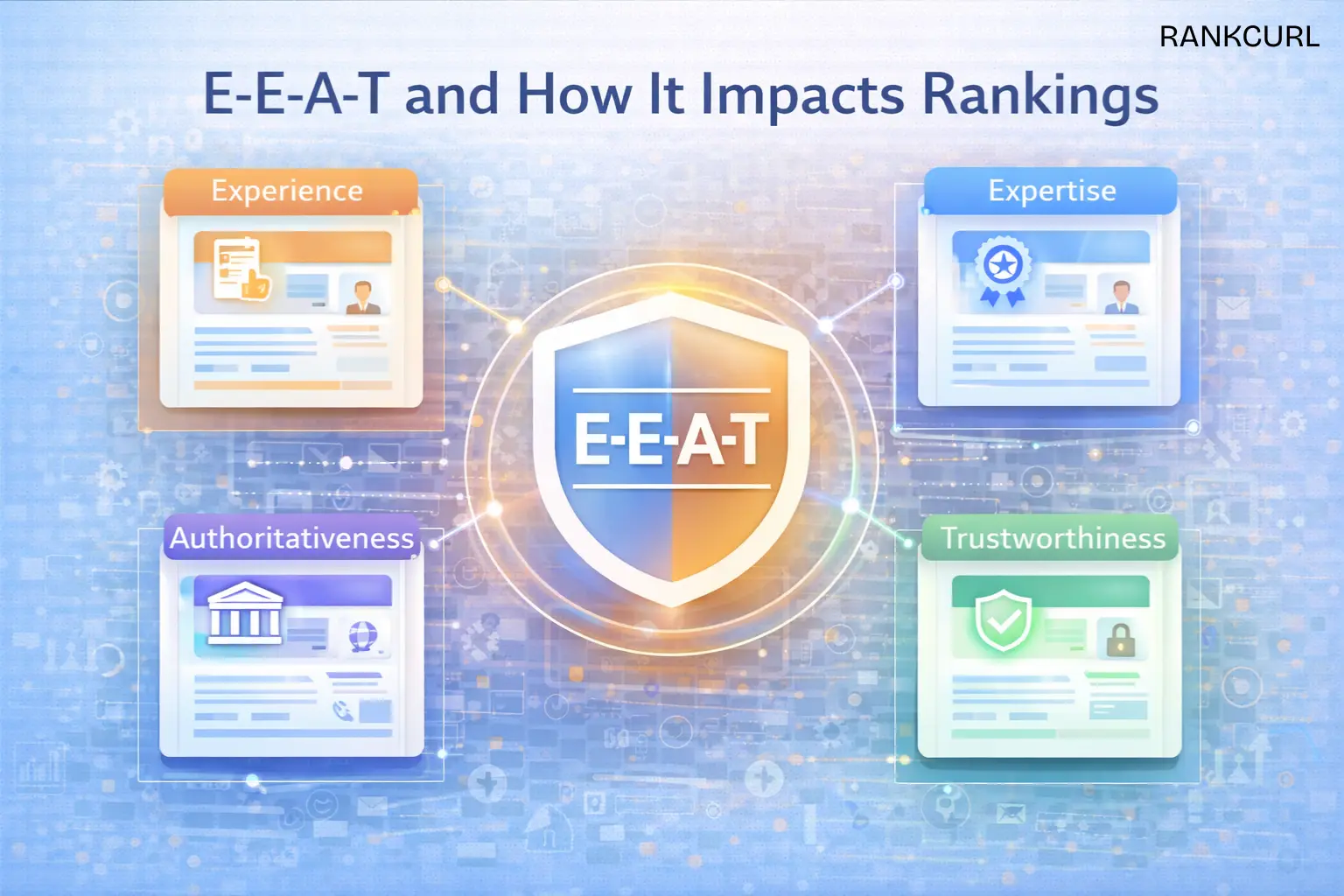
E-E-A-T stands for Experience, Expertise, Authoritativeness, and Trustworthiness. These factors help search engines evaluate the quality of your content and decide whether it deserves to rank higher.
In this guide, you’ll learn what E-E-A-T means, why it matters, and how you can improve it to boost your rankings.
What is E-E-A-T?
E-E-A-T is a concept used to assess content quality.
It includes four key elements:
- Experience – Whether the content creator has real-life experience
- Expertise – The level of knowledge in the topic
- Authoritativeness – Reputation of the website or author
- Trustworthiness – How reliable and safe the content is
These signals help search engines determine if your content is worth showing to users.
Why E-E-A-T is Important for SEO
Search engines aim to provide the best possible results.
If your content lacks credibility, it may struggle to rank—even if it is well-optimized.
E-E-A-T helps:
- Improve content credibility
- Build user trust
- Increase ranking potential
- Reduce misinformation
It is especially important for topics related to health, finance, and safety.
Understanding Each Element of E-E-A-T
Let’s break down each component in simple terms.
1. Experience
Experience refers to real-world involvement with the topic.
For example, a person who has actually used a product can provide more valuable insights than someone who hasn’t.
Adding personal insights, case studies, or examples improves experience signals.
2. Expertise
Expertise means having strong knowledge in a specific area.
This doesn’t always require formal qualifications, but your content should show deep understanding.
Well-researched and clearly explained content builds expertise.
3. Authoritativeness
Authority is about recognition.
If your website or author is known in a particular field, search engines see it as a strong signal.
This can be built through:
- Quality content
- Mentions from other websites
- Strong online presence
4. Trustworthiness
Trust is the most important factor.
Your website should be:
- Secure (HTTPS)
- Transparent
- Accurate
Providing correct information and clear details builds trust over time.
How E-E-A-T Impacts Rankings
E-E-A-T is not a direct ranking factor, but it strongly influences how content is evaluated.
Websites with strong E-E-A-T signals tend to:
- Rank higher in search results
- Gain more user trust
- Perform better over time
On the other hand, low-quality or misleading content may lose visibility.
What is YMYL and Why It Matters
YMYL stands for “Your Money or Your Life.”
These are topics that can impact a person’s health, finances, or safety.
Examples include:
- Medical advice
- Financial planning
- Legal information
For these topics, E-E-A-T is even more important.
Search engines apply stricter quality checks to ensure users get reliable information.
How to Improve E-E-A-T on Your Website
Improving E-E-A-T requires consistent effort.
Here are practical steps you can follow:
1. Show Author Information
Add clear author details to your content.
Include:
- Name
- Bio
- Experience
This builds credibility and trust.
2. Create High-Quality Content
Focus on writing content that is:
- Accurate
- Helpful
- Well-researched
Avoid thin or misleading content.
3. Use Reliable Sources
Support your content with trusted references.
This improves both expertise and trustworthiness.
4. Build Backlinks from Authority Sites
Build Links from trusted websites increase your authority.
Focus on quality over quantity.
5. Keep Content Updated
Outdated content can harm trust.
Regularly update your articles with fresh information.
6. Improve Website Security
Make sure your website uses HTTPS and is safe for users.
A secure website builds trust.
7. Add Reviews and Testimonials
If applicable, show real feedback from users.
This adds social proof and increases credibility.
8. Maintain Transparency
Provide clear information about your website, including:
- About page
- Contact details
- Privacy policy
Transparency builds confidence.
Common Mistakes to Avoid
Avoid these mistakes that can hurt your E-E-A-T:
- Publishing low-quality content
- Hiding author information
- Spreading incorrect information
- Ignoring website security
- Using clickbait titles
Fixing these issues can improve your overall SEO performance.
E-E-A-T and Content Strategy
E-E-A-T should be part of your content strategy.
Before publishing any content, ask:
- Is this helpful?
- Is it accurate?
- Does it build trust?
If the answer is yes, you are on the right track.
Final Thoughts
E-E-A-T is all about building trust and credibility.
Search engines want to rank content that genuinely helps users and comes from reliable sources.
If you focus on creating valuable, honest, and well-structured content, your E-E-A-T signals will improve naturally.
Over time, this will lead to better rankings, more traffic, and stronger authority in your niche.
Leave a Reply