Search engine optimization has changed a lot over the years. What worked earlier—like stuffing keywords into content—is no longer effective. Today, search engines focus more on understanding meaning rather than just matching words.
This shift has introduced a new approach called semantic SEO.
If you’re still relying only on traditional SEO methods, you may be missing out on better rankings and more targeted traffic. In this guide, we’ll break down the difference between semantic SEO and traditional SEO, and show you which approach works better in today’s search environment.
What is Traditional SEO?
Traditional SEO is the older approach to optimization where the main focus is on keywords.
In this method, content is created around a specific keyword, and the goal is to use that keyword multiple times across the page. This includes:
- Title
- Headings
- Meta description
- Content body
The idea was simple: the more times you use a keyword, the higher your chances of ranking.
While this method worked in the past, it often led to unnatural and low-quality content.
What is Semantic SEO?
Semantic SEO focuses on the meaning behind search queries instead of just keywords.
Instead of targeting a single keyword, it aims to cover a topic completely by including related terms, concepts, and user intent.
This approach helps search engines understand:
- What your content is about
- How it relates to other topics
- Whether it satisfies user intent
Semantic SEO creates content that feels natural, useful, and complete.
Key Difference Between Semantic SEO and Traditional SEO
The main difference lies in how content is created and optimized.
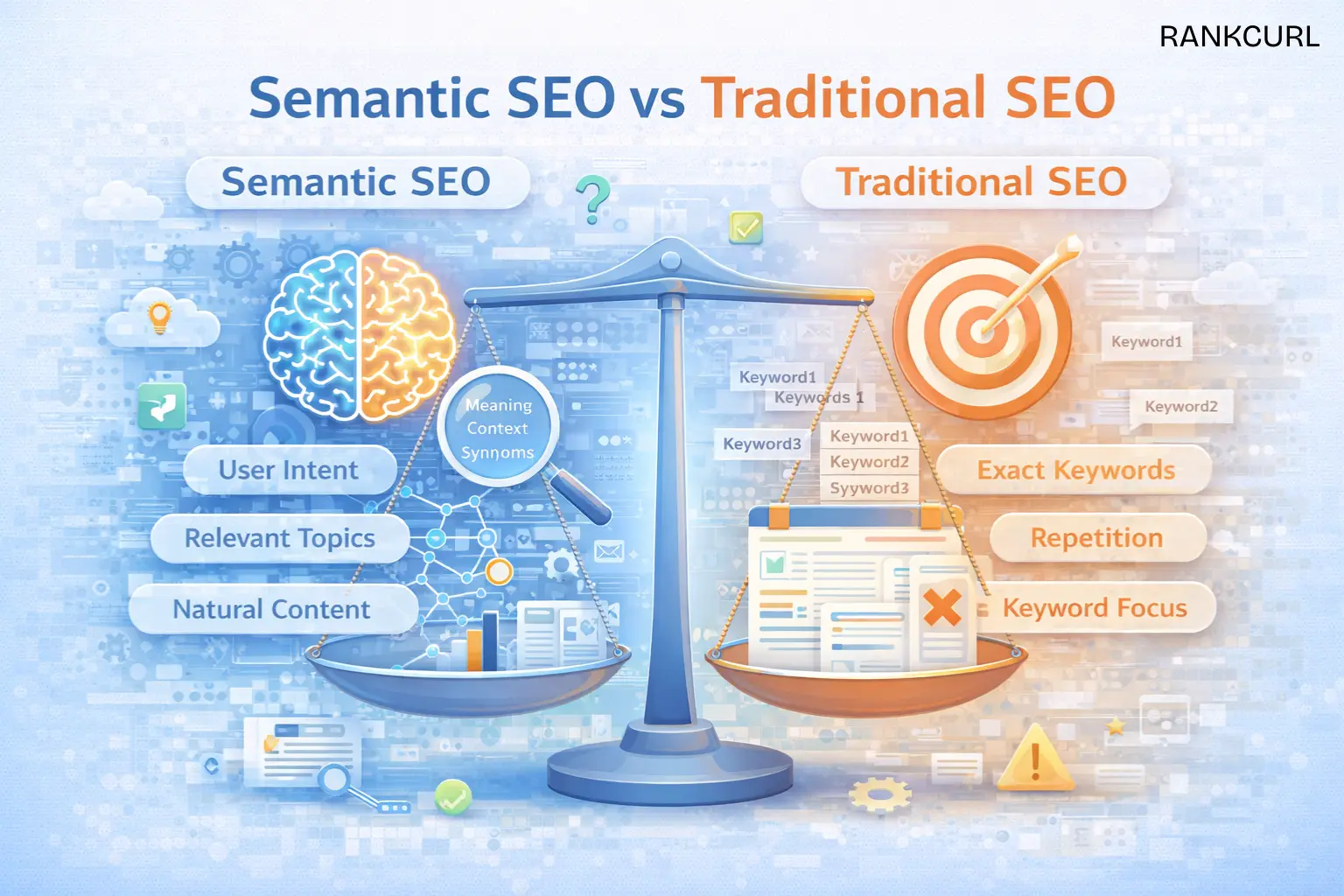
Traditional SEO is keyword-focused, while semantic SEO is topic-focused.
Here’s a simple comparison:
| Factor | Traditional SEO | Semantic SEO |
|---|---|---|
| Focus | Exact keywords | User intent & meaning |
| Content Style | Repetitive | Natural & informative |
| Strategy | Keyword placement | Topic coverage |
| Search Understanding | Basic | Advanced |
| User Experience | Often ignored | High priority |
Semantic SEO aligns better with how modern search engines work.
Why Semantic SEO is Important Today
Search engines have become smarter.
They now understand context, synonyms, and user intent. This means they don’t rely only on exact keyword matches anymore.
Semantic SEO helps you:
- Rank for multiple related keywords
- Improve content quality
- Increase user engagement
- Reduce bounce rate
If your content answers user queries clearly, it has a better chance of ranking higher.
How Search Engines Have Evolved
Earlier, search engines simply matched keywords.
Now, they analyze:
- Context of the search
- Search intent
- Content relevance
- Topic depth
This evolution means websites need to focus more on value and clarity rather than repetition.
Benefits of Semantic SEO
Switching to semantic SEO offers several advantages:
- Better rankings for long-tail queries
- More organic traffic
- Improved readability
- Higher user satisfaction
It also future-proofs your content as search engines continue to improve.
Limitations of Traditional SEO
Traditional SEO still has some value, but it comes with limitations:
- Can lead to keyword stuffing
- Content may feel unnatural
- Limited keyword reach
- Lower engagement
Relying only on traditional SEO is not enough anymore.
How to Implement Semantic SEO
If you want better results, start applying semantic SEO strategies.
1. Focus on User Intent
Understand what users are actually looking for.
Are they searching for information, a product, or a solution?
Create content that directly answers their needs.
2. Cover Topics in Depth
Instead of writing short keyword-based content, create detailed articles.
Include:
- Related subtopics
- Examples
- Clear explanations
This makes your content more valuable.
3. Use Related Keywords Naturally
Don’t repeat the same keyword.
Use variations and related terms naturally within your content.
This helps search engines understand the topic better.
4. Structure Your Content Properly
Use headings, subheadings, and clear formatting.
This improves readability and helps search engines scan your content easily.
5. Add Internal Links
Link to other relevant pages on your website.
This strengthens your content and improves navigation.
6. Answer Multiple Questions
Try to answer different questions related to the topic in one article.
This increases your chances of ranking for multiple queries.
When to Use Traditional SEO
Traditional SEO is not completely useless.
It still works in some cases, such as:
- Targeting specific keywords
- Writing meta tags
- Optimizing URLs
But it should be used alongside semantic SEO, not as a replacement.
Best Approach: Combine Both Strategies
The best strategy is to combine both approaches.
Use traditional SEO for structure and basic optimization, and semantic SEO for content depth and quality.
This balanced approach helps you:
- Rank better
- Reach a wider audience
- Create high-quality content
Common Mistakes to Avoid
While implementing SEO, avoid these mistakes:
- Overusing keywords
- Ignoring user intent
- Writing shallow content
- Not updating old content
- Skipping internal linking
Fixing these can improve your results quickly.
Final Thoughts
SEO is no longer just about keywords. It’s about understanding what users want and delivering the best possible answer.
Semantic SEO focuses on meaning, context, and user experience, making it more effective in today’s search landscape.
If you want long-term results, start shifting your strategy toward semantic SEO while keeping the basics of traditional SEO in place.
This combination will help your website grow steadily and rank better in search results.
Leave a Reply