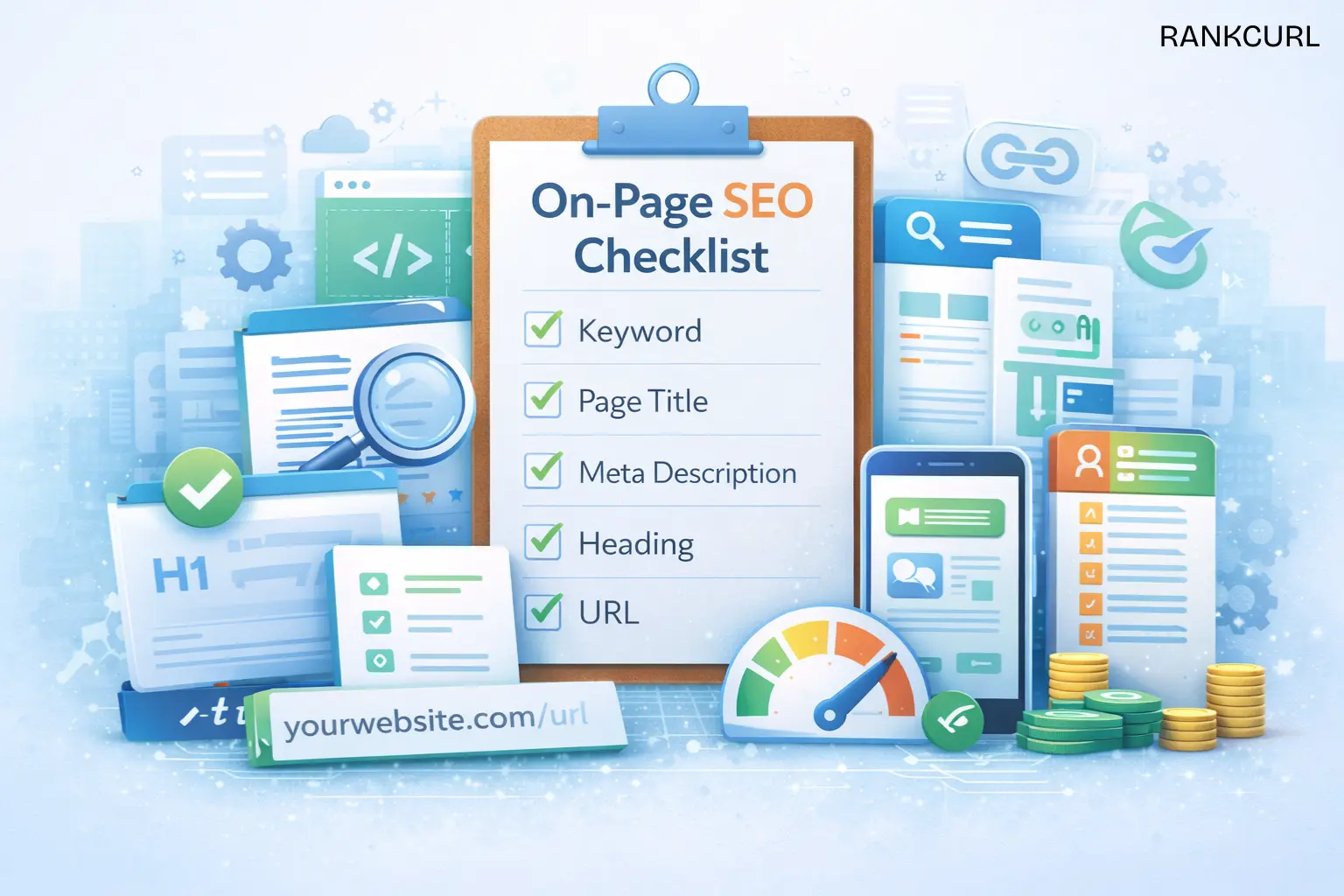
When people look for information online search engines try to show them the relevant and useful pages. If your website is set up correctly it is easier for search engines to understand what your website is about and show it to the people.
This is where on-page SEO plays an important role.
On-page SEO is about making web pages better so they show up higher in search results and get more visitors. Unlike off-page SEO, which’s about getting links from other websites on-page SEO is about the things on your own website.
For people starting out making these things better can make a big difference in how search engines see and rank your website.
This guide explains the on-page SEO checklist that every beginner should follow to get started with search visibility.
What is On-Page SEO?
On-page SEO is about making your websites content and structure better so search engines can understand what it is about.
It involves making parts of the page better such as headings, keywords, content, links and technical things.
When these things are done correctly it is easier for both users and search engines to navigate your website.
On-page optimization helps search engines figure out what your page is about and whether it should show up for searches.
Why On-Page SEO is Important
A lot of websites struggle to show up in search results because their pages are not set up correctly.
Search engines need signals to understand what a page is about. If those signals are missing or confusing the page may not show up in search results.
On-page SEO makes these signals better. Helps search engines understand your content more accurately.
It also makes the user experience better by making pages easier to read faster to load and better organized.
When both search engines and users can understand your content easily you are more likely to show up in search results.
On-Page SEO Checklist for Beginners
Here is a checklist that beginners can follow to make any webpage better.
Use the Right Keyword
Keywords help search engines understand what a page is about.
Before writing find the keyword that represents the topic of your page. This keyword should show up naturally in the title, headings and content.
Do not use the keyword too many times. The goal is to make the content natural and easy to read while clearly showing the topic.
Make the Page Title Better
The page title is one of the important things that helps your page show up in search results.
It shows up in search results. Tells both users and search engines what the page is about.
A good title should have the keyword clearly describe the page and not be too long.
A good title makes users want to click on it. Helps search engines understand what the page is about.
A good title should:
- Include the primary keyword
- Clearly describe the page topic
- Stay within a reasonable length
Write a Clear Summary
The summary provides a description of the page.
Although it does not directly affect how high your page shows up in search results it can influence whether users click on your result.
A good summary should briefly explain what the reader will learn from the page and include the keyword naturally.
Use Proper Headings
Headings help organize content and make it easier to read.
A well-structured page usually follows this hierarchy:
- H3 for subtopics
- H1 for the main title
- H2 for major sections
This structure makes it easy for readers to scan the page and helps search engines understand how the information is organized.
Create Good Content
Content is one of the important parts of on-page SEO.
Search engines like pages that provide accurate and well-organized information.
Good content should answer the readers question clearly provide information and be easy to understand.
Pages that provide genuine value tend to do better in search results over time.
Make the URL Better
A clean and descriptive URL helps both users and search engines understand what the page is about.
URLs should be short simple. Include the main keyword when possible.
For example a URL like “https://rankcurl.com/services/seo/technical-seo/” or “https://rankcurl.com/blog/technical-seo/” is easier to understand than an URL with numbers or random characters.
Add Links to Other Pages
Links to pages on your website help search engines discover more pages and understand how different topics are related.
They also encourage visitors to look at content, which improves engagement and time spent on the website.
Make Images Better
Images make the webpage look better but they should also be optimized for search engines.
This includes using file names adding text that describes the image and compressing images to make the page load faster.
Proper image optimization helps search engines understand content and makes the page perform better.
Make the Page Load Faster
Page speed is important for user experience.
If a website takes long to load visitors may leave before the page even shows up.
Improving page speed can involve compressing images reducing scripts and using efficient hosting.
A faster website provides an experience for users and improves search engine performance.
Make the Website Work on Mobile Devices
Many users browse the internet using smartphones.
Search engines like websites that work well on devices.
A friendly design ensures that content adjusts properly on smaller screens and remains easy to navigate.
This improves both usability and search visibility.
Use a Clear Content Structure
Breaking content into sections with headings, bullet points and short paragraphs makes it easier to read.
Large blocks of text can overwhelm readers. Reduce engagement.
A clear content structure helps visitors quickly find the information they need.
Add External References When Necessary
Sometimes linking to external sources can make your content more valuable.
These references can provide context or supporting information.
Search engines often view researched content as more reliable and trustworthy.
Final Thoughts
On-page SEO is one of the important foundations of search engine optimization.
By improving things like page titles, headings, keywords, links and content website owners can make their pages easier for search engines to understand.
For beginners following a checklist helps ensure that no important thing is overlooked.
When on-page optimization is combined with content and a good user experience it becomes much easier for websites to grow their search visibility and attract organic traffic.
Making improvements, across your pages can gradually strengthen your websites authority and performance in search results.
Leave a Reply